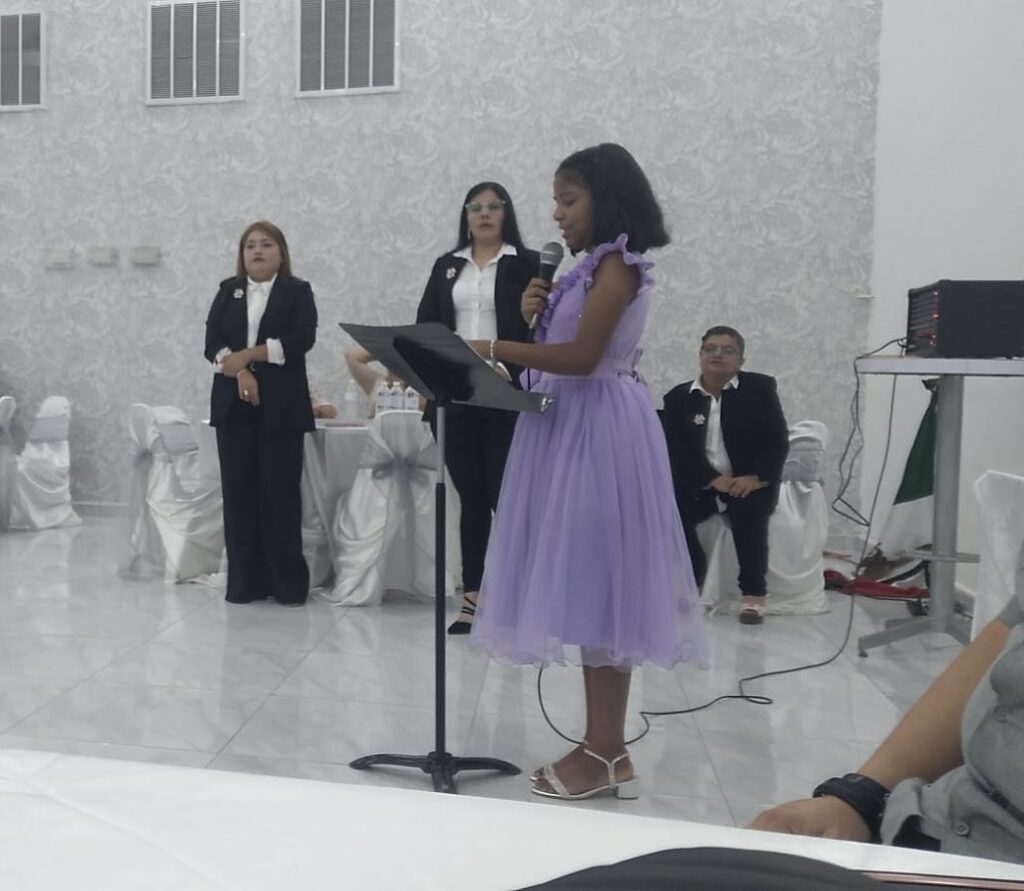
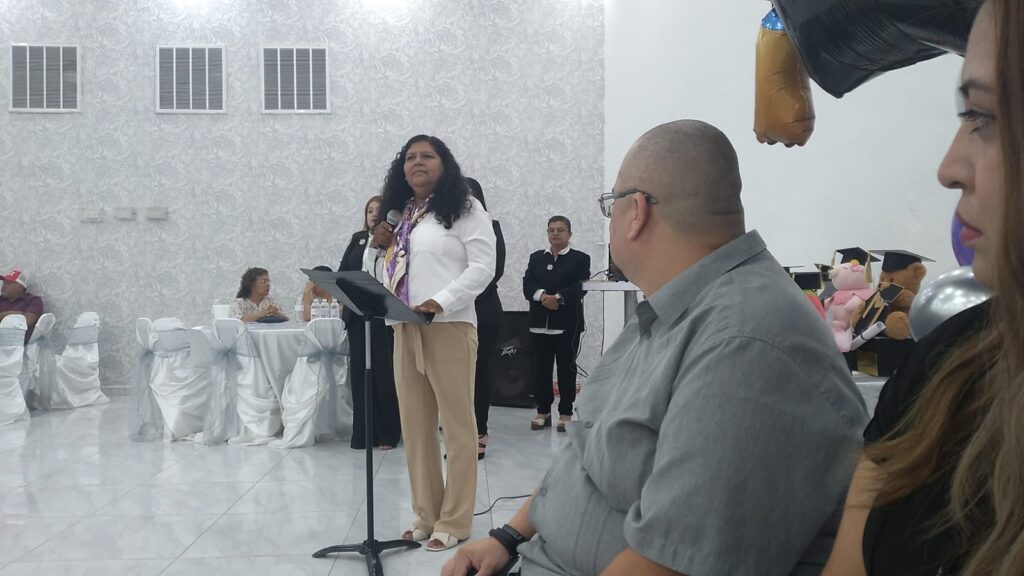
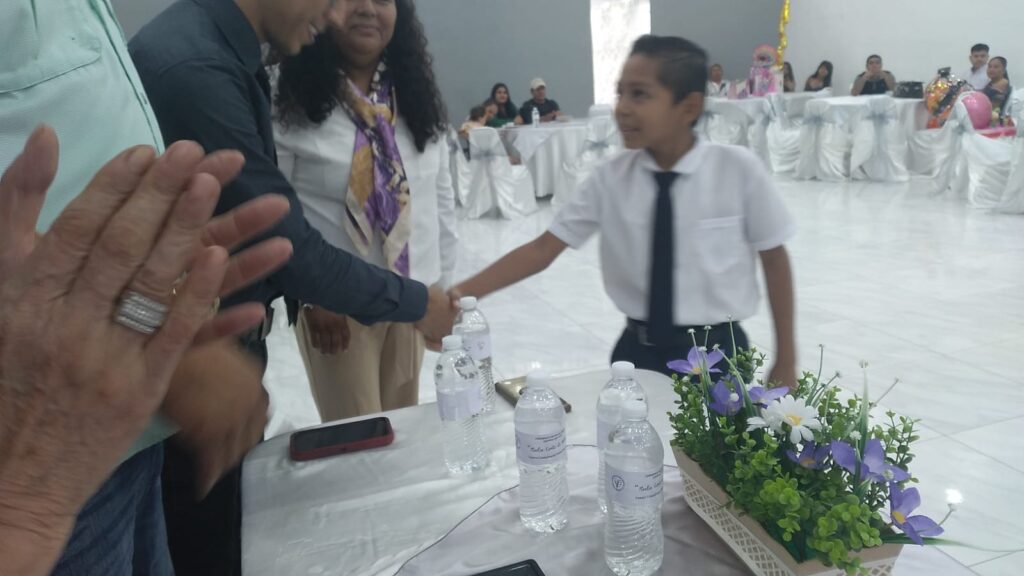
As the news of the disturbances caused yesterday in Mexico hit around the world, we want to ensure our volunteers and friends that our city has not been impacted by violent acts at all. The events that were unleashed yesterday were committed by members of a drug cartel whose boss was captured in a major operation that took place in Tapalpa, state of Jalisco, about 700 miles from Rio Bravo. The criminals reacted to this with blockades and vehicle burnings in 11 states of the republic, but the country is at peace now. There were blockades on the road to Reynosa but they were cleared quickly by our armed forces. That was the extent of the violence in our area. There has not been any further developments and we do not expect any in Rio Bravo. Our staff and programs are working normally and the population is going about its business as usual. We are keeping a very close look at the situation and following extra safety rules just in case. We have a visiting team from Oklahoma and they went about their business as usual: they held a banquet for scholarship students yesterday, crossed the border and are now building their casita as they normally do. As stated before,, to Manos Juntas your safety is paramount and our proven track record of keeping our team safe goes back 33 years. We invite you to cast out fear and come to work with us. There is no danger to our teams or we would be the first to advise you not to come.
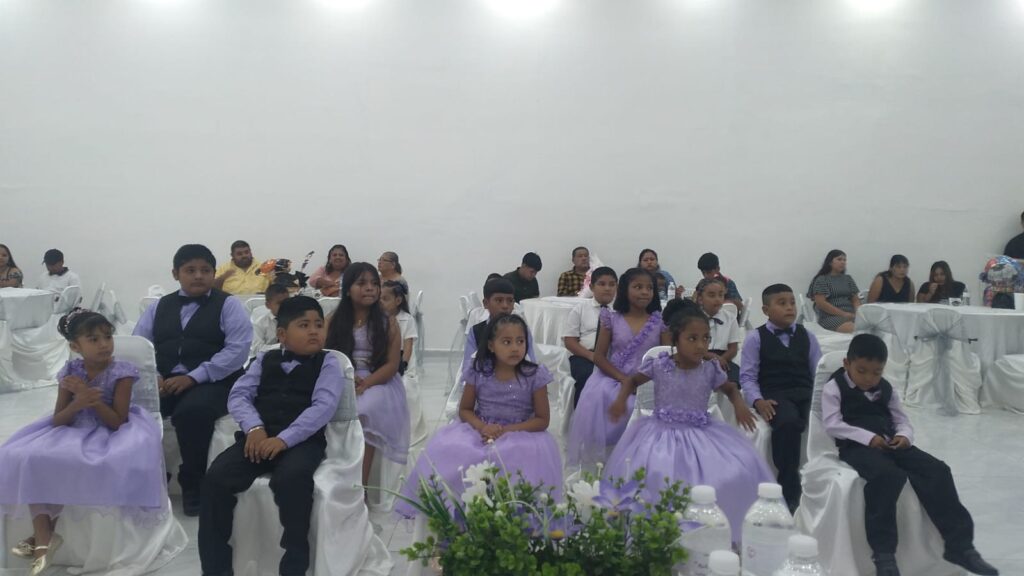
I was nervous, at first, at the idea of crossing the border from Texas to Tamaulipas, Mexico. Although I had visited Mexico before, it had been eleven years; I’d flown to my destination at the time and frankly the climate crossing the US-Mexico border has changed since then. I was nervous driving across even though a representative from UMVIM was driving me. What if the line at the checkpoint stretched on for miles? What if border security was tough on us? What if we saw them committing some kind of cruelty toward an immigrant in a neighboring vehicle? I wasn’t ready to stomach that kind of horror.
Actually crossing at the Donna International Bridge proved to be anticlimactic. We slowed down to wind lazily around concrete barriers, only one other car weaved through traffic calming obstacles ahead of us, and border security waved us through without so much as glancing at our passports. It was eerily quiet. Calm. Empty. Within moments, we were traveling swiftly past the infamous border wall, which was rusty and missing whole sections here and there. And suddenly we were bouncing over the rumble strip that announced our official entrance into Mexico.
It wasn’t long before chain links and barbed wire gave way to fields and palm trees, and those, in turn, gave way to bustling shops and tiny casitas all crammed together in a row. In Rio Bravo, pedestrians, cars, cyclists, and roaming dogs all share a dusty road with little sidewalk to be divided among them. Cavernous potholes and mountainous speed bumps make the drive slow and the placement of tires deliberate. But, as a passenger, the slow lurching crawl toward our destination gave me enough time to read street signs and store names. I started to recall whatever remnants of high school Spanish still swirled faintly in my memory.
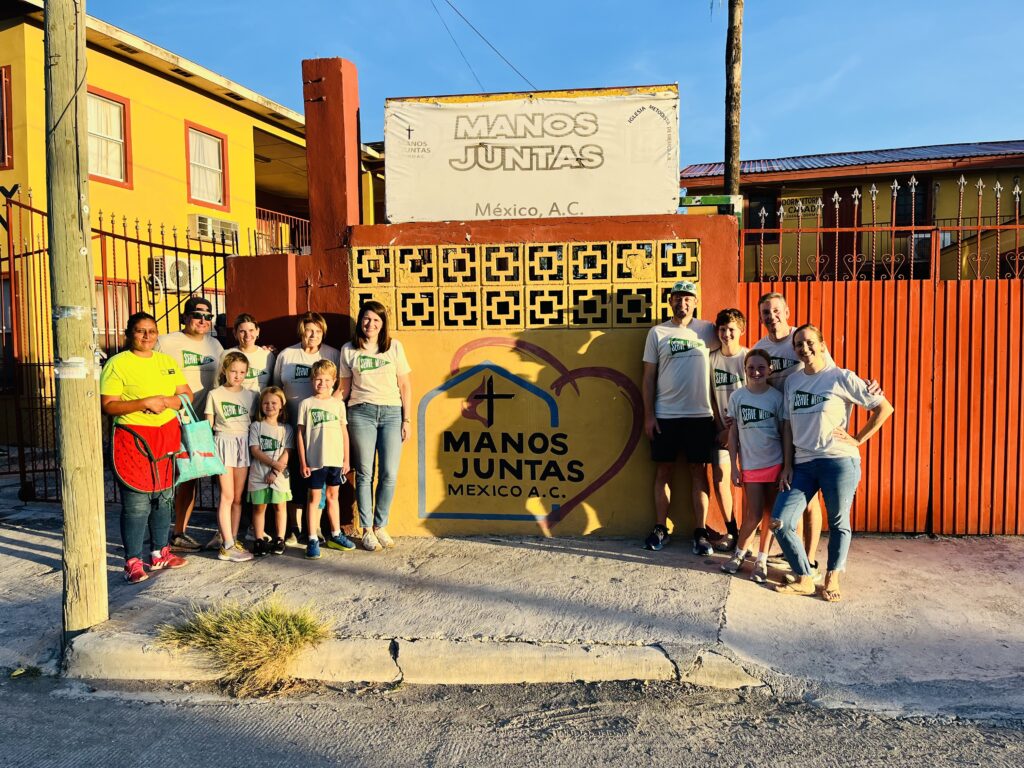
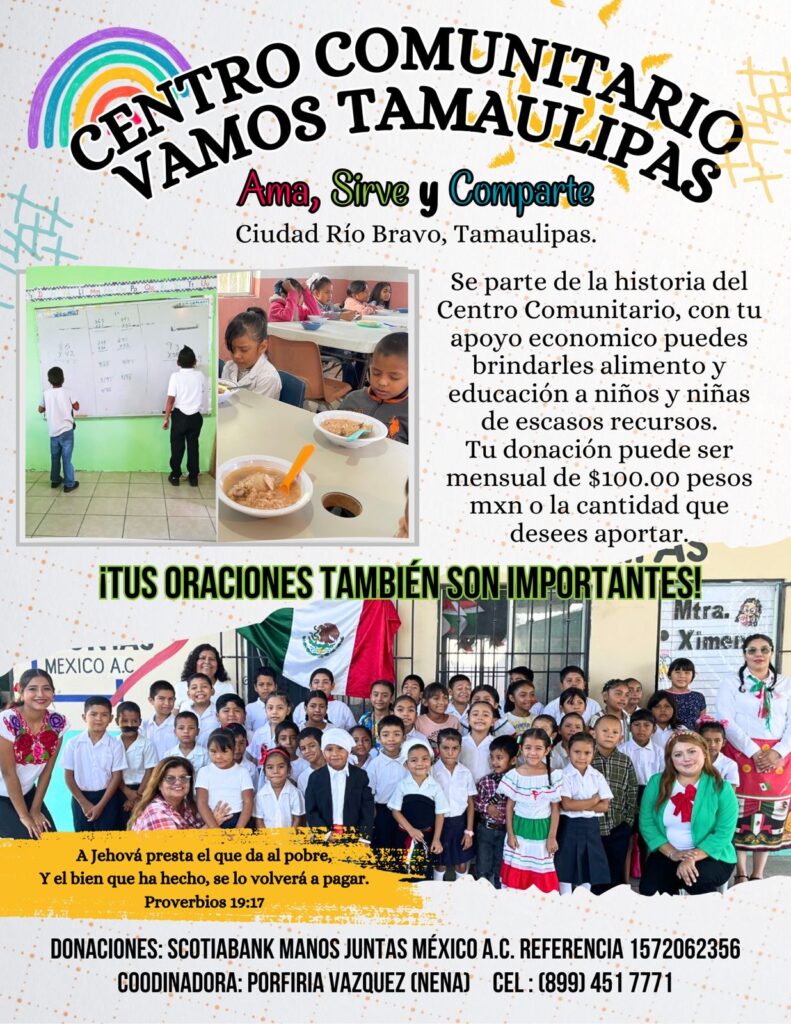
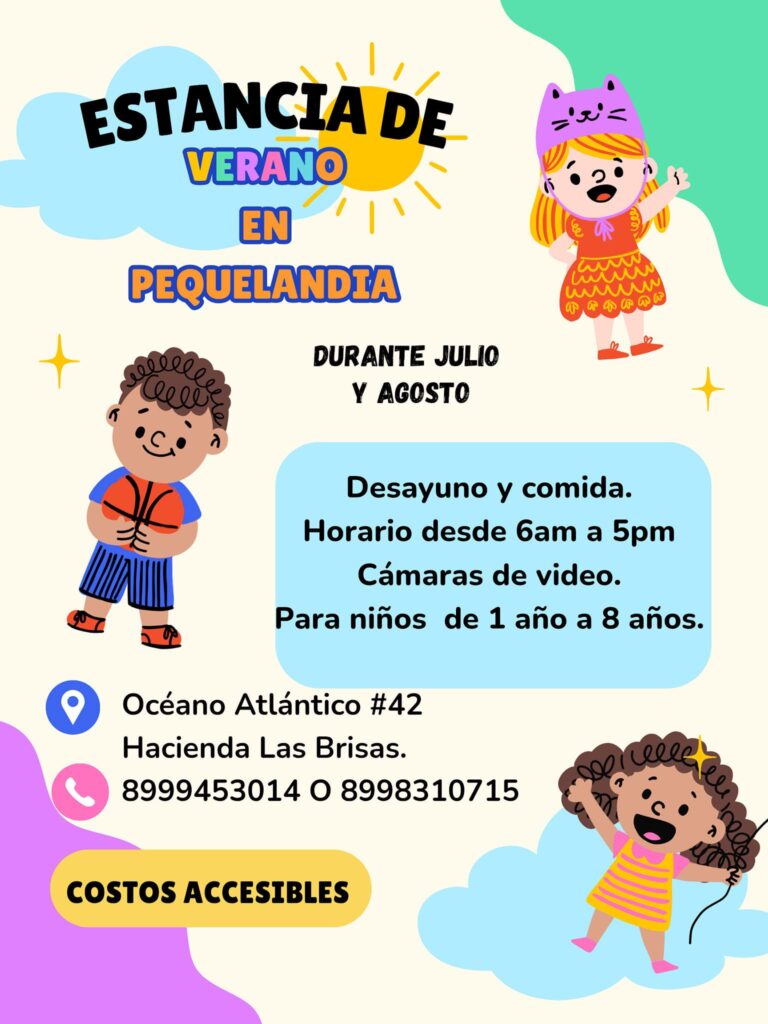
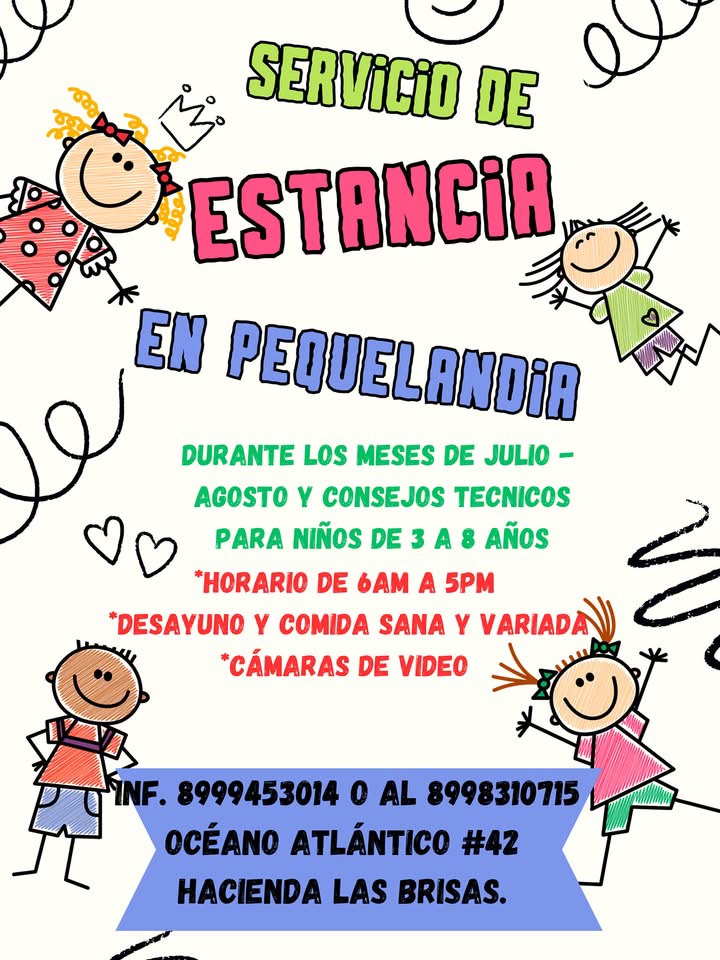
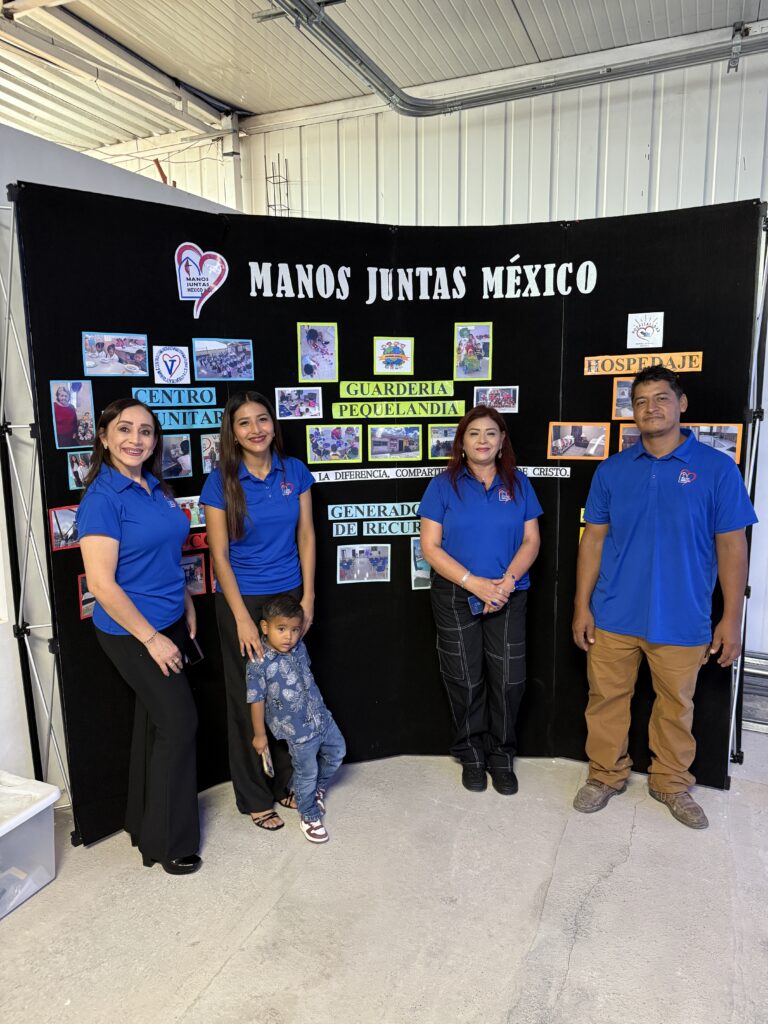
But before I had enough time to recall appropriate Spanish greetings, we had parked outside La Guarderia Pequelandia, a daycare which had been built and is now run by Manos Juntas. Manos Juntas, which translates to Hands Together, is an organization that builds casitas (small, one-room houses), schools, bathrooms, and community centers for the poorest residents of the Rio Bravo area to benefit from. With their assistance 20 children, with space for more have access to affordable daycare and many families have received free housing. Although it is now seeking to one day be self-sufficient, Manos Juntas has been hosting mission teams from the US since 1991. Teams pay for the building materials; as well as a modest fee for housing, food, and transportation; and they spend the week working on building projects that improve the community’s resources.
Screenshot
Here, although this daycare was up and running, it was being expanded to accommodate the growing number of families benefiting from sliding scale childcare. We rang the bell and suddenly I was stumbling through a flurry of buenos dias-es; bien, ¿y tu?-s; and me llamo-s. The Day Care staff graciously welcomed us through their doors. Already I could hear the sounds of the Minnesota mission team slamming shovels into dry dirt and scraping stucco across newly erected cinderblock walls. The scent of an almost-ready lunch wafted through the warm air accompanied by the warbles and trills of happy toddlers anticipating recess. The brightly painted courtyard was almost blinding in the sunlight, but a cool breeze and the shade of dark green palm leaves offered relief to team members on their break.
Although I hadn’t realized it yet, there was something holy at work in this place. You see, Manos Juntas—Hands Together—is about human connection. It’s not just about connecting people who are already neighbors and friends together. It’s about connecting strangers to the local community; connecting students to much needed teachers; connecting moving families to new neighbors; connecting nationals to international travelers; connecting ill patients to doctors; connecting budding artists to art studios; connecting each one of us to God, face to face, hand in hand. This place was holy ground indeed.
I got just a taste of this holy connection over lunch with the Minnesota team. We pinched taco meat, beans, potatoes, and salsa verde between fresh tortillas still steaming from the pan. And washed it all down with the most refreshing hibiscus tea I’ve ever had. Between sips of tea and bites of taco, I learned that this had been the Minnesota team’s second project with Manos Juntas. The year before, a group of them had come down to construct a couple of casitas. They had felt such a connection to the mission of Manos Juntas and the work they had done with them that they had decided to come back for another construction project, this time at the daycare. God had taken their first act of compassion and doubled it, multiplying their work and their joy like loaves and fishes.
Although I would have liked to have stayed and helped the team build, my role was much humbler: I had come to Rio Bravo not to work, but simply to come and see.
Our second stop was the retreat center. We parked the car just outside the dorm’s iron gates which were painted pueblo orange and swung wide to welcome us to our temporary home. Immediately, I was greeted by two furry friends with tails wagging excitedly for new visitors. Honey and Rusty make up the welcoming committee of Manos Juntas’ home base. The two former strays are always looking for a hand to pat them and an accommodating hand is never too far away.
After taking my time to pet the dogs, I hoisted my luggage and made my way inside the dorms. Every dorm room has two bunk beds, and each bed is made up with sheets, a blanket, and a pillow. A bathroom with a shower is attached to the far side of the room, ready for sweaty volunteers returning from a day of labor in the Mexican heat. The dorms are the perfect way to house large church groups; it was certainly a pleasant experience be on a mission journey that didn’t require me to spare precious luggage space for an air mattress and bedding.
After getting settled, I got a quick tour of the dining hall. Julian, my guide, showed me around a spotless kitchen and introduced me to their cook, Claudia. Our conversation was short, as I didn’t speak much Spanish and she was already preparing a delicious-smelling dinner. I would later get to taste the object of her hard work: pork quesadillas, lentil soup, and dessert crepes. Each dish was more mouthwatering than the last. By the time dinner would be finished that night, the Minnesota team and I would sit contentedly around the large round tables that litter the dining hall, pleasantly full and swapping stories about each other’s work before they sat down for an official group debrief on some comfortably worn-in couches that sit next to the entryway.
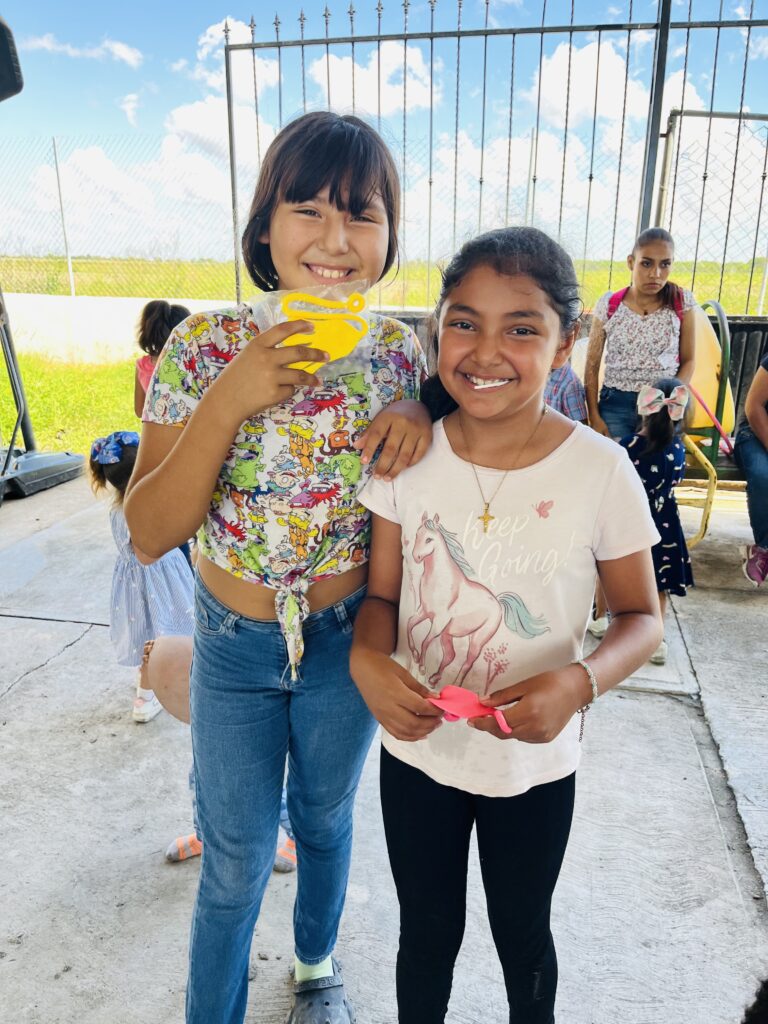
Talking with the Minnesota team would give me insight into the hard work that goes into a day of construction work. But talking to Julian gave me an appreciation for the work that Manos Juntas is always doing not only to ensure mission journeys go smoothly but to ensure that the work teams do is truly beneficial to people who need real help in the Rio Bravo area. Julian offered me two days of his time to drive me to various locations to see the fruits of previous Manos Juntas building sites. We bounced and jolted down washed-out dirt roads to visit a school that only has bathrooms on site thanks to the generosity of Manos Juntas. We waved at schoolchildren through the bars of elementary schools that Manos Juntas had built and even got to step inside one while school was in session. The kids got to practice their English on me, and I got to practice my Spanish on them. One little girl handed me a piece of scrap paper on my way out. She had drawn a pink ajolote, an axolotl, for me. Although many of the schools are now state funded, some of them are still operated by Manos Juntas staff. Many families cannot afford all the fees and supplies that are required to attend even public schools in Mexico, so Manos Juntas offers them discounted rates, and some students even attend their afterschool remedial classes at the Susanna Wesley Center.
After touring the schools, we navigated the narrow trash-strewn streets of Vamos, Tamaulipas where squatters build houses nearly on top of one another with gates and one-room houses that are often made out of hastily nailed plywood and rusting sheets of metal. The lucky families seemed to have just enough money to erect a shelter out of cinderblocks. Several such houses had been donated through the care and attentiveness of Manos Juntas. Countless mission teams have volunteered their time and money building these casitas. And I was able to spy one just barely peeking out past an adjacent house. Its simple design, white stucco walls, and pink trim helped it stick out from the other houses.
I didn’t see the family living there, but I know if I had, I would have seen God’s eyes peering back at me. Matthew 25:31–46 reminds us that when we meet the needs of poor, sick, and lonely people, the “least of these” as Jesus calls them, that we are actually, literally, meeting the needs of Jesus himself. Although I didn’t get to help build this casita, I know this family has a safe home to live in only because of the kindness of strangers. Manos Juntas’ ties to UMVIM and their full-time presence in the community allows it to connect unlikely people together for the betterment of both: One family receives the basic shelter they need to survive, and one mission team leans in close to see the face of God.
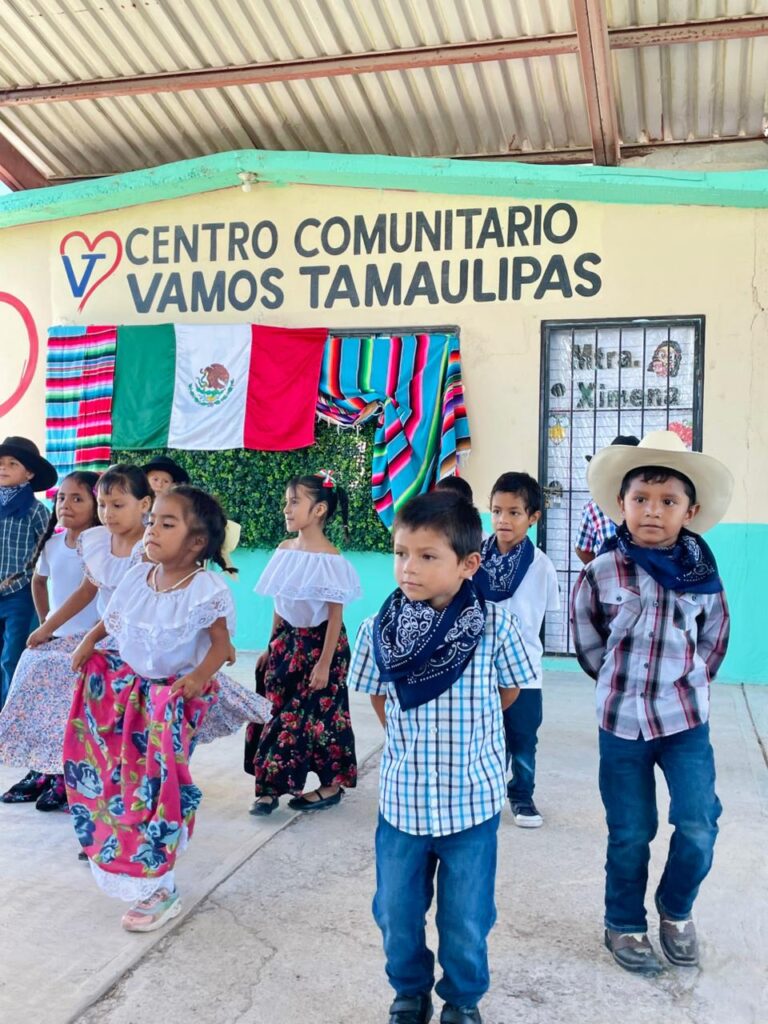
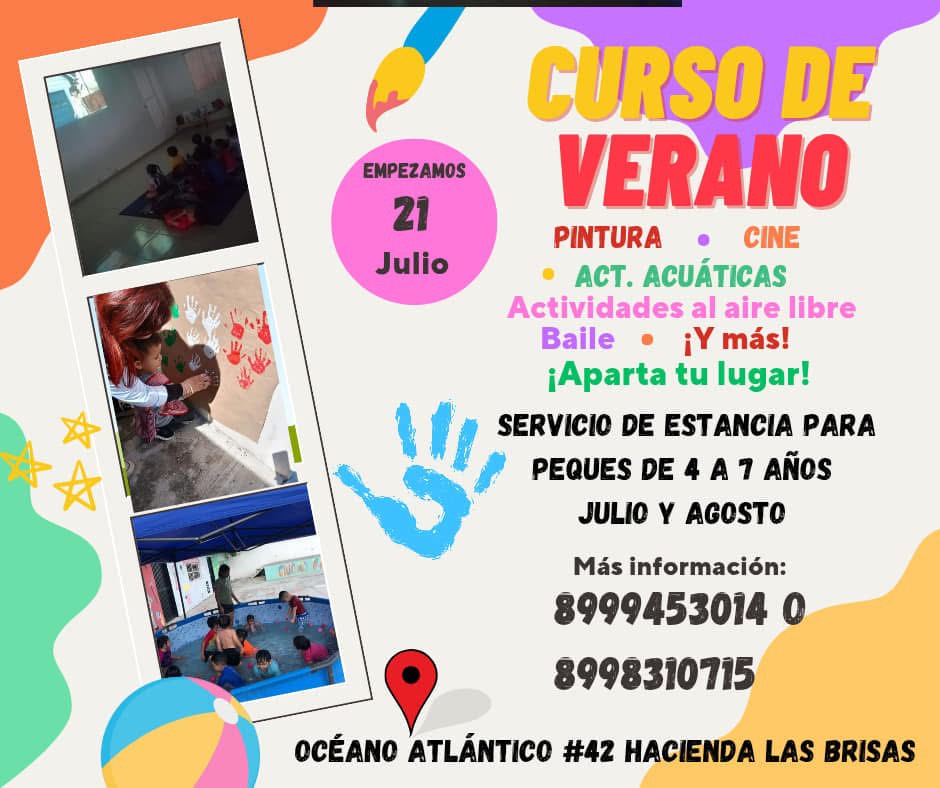
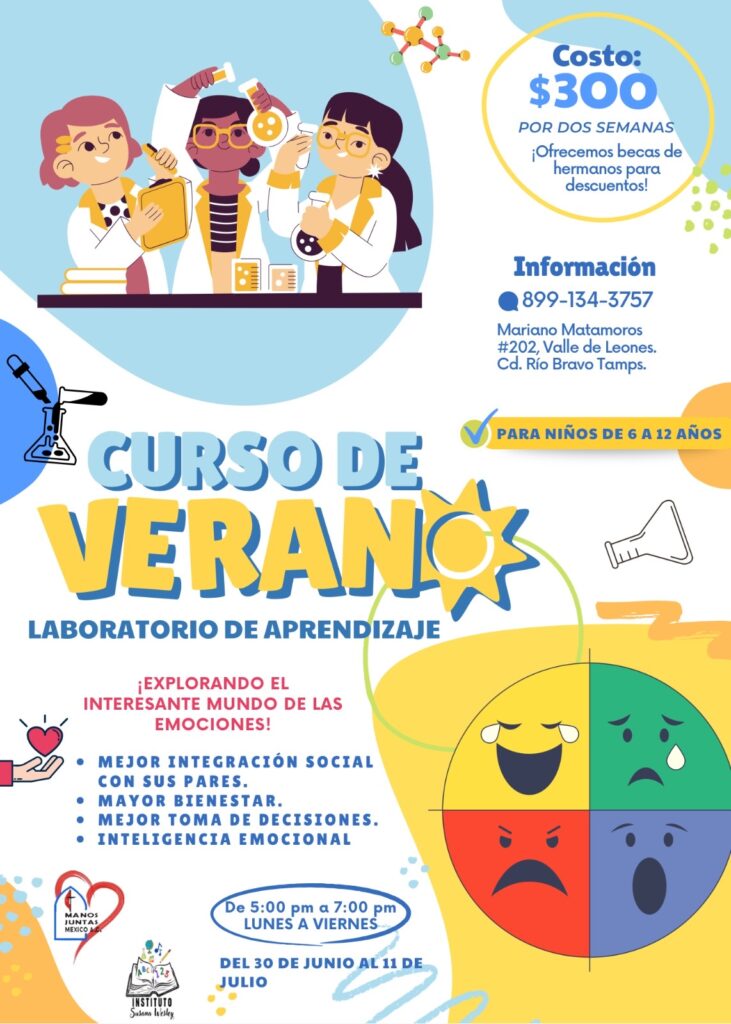
I was reluctant to leave Vamos behind. The palpable poverty in the makeshift town made me feel like it was the most important place to be: one of the most important places I’ve ever visited. It was holy, the place where God lived among the people. But God had been is living in other places too. Places where Manos Juntas had built community centers. These were multipurpose buildings where church services, birthday parties, quinceañeras, dance classes, cultural events, and town meetings can be held for a reasonable fee. One such center even offered a pool in the back. They are the perfect places to hold space for people to connect to each other and build positive community ties.
Julian explained that the community centers are there not only to help people build relationships with other members of the community, but they also save lives. One of the biggest issues facing the children of Mexico is the cartels. The cartels will give an impoverished kid a smartphone. They never would have been able to afford one on their own, so the phone is a luxury beyond belief; one that sets them apart from their peers. They give these phones to the kids and then tell them to keep watch and call them with it if they see the police or a rival gang coming. For the kids, it’s an easy way to gain status and to make some money for their struggling families. For the cartel, it’s an easy way to recruit children. Once these kids are in, they are groomed to participate in worse and worse activities, Julian explained. On average, these kids are killed while participating in cartel activities at age twenty-one.
It’s a grim reality for many children who live in poverty just across the border. But there is a way to combat the cartel. The community centers Manos Juntas builds are their way of suffocating the hold cartels have on children. If kids are busy at school during the day, if they are busy doing homework and taking classes at a community center at night, and if their bellies are always full from a meal at school, then they don’t have time or interest in running errands for the cartels. They have something better to do. Manos Juntas is designed to do just that.
With all the talk about cartels, Julian took a moment to emphasize that the presence of cartels in Mexico doesn’t make visiting dangerous. He emphasized that it is completely safe to visit Rio Bravo and other Mexican cities with Manos Juntas. “It would be like never visiting Chicago because you’re afraid of the gangs,” he said. The cartel isn’t interested in hurting random Americans; they’re only interested in their rivals, and even cartel members see the benefit of missionaries building homes for families and schools for kids. Most cartel members are only part of the cartel because they don’t have another option and they want something better for their own kids and neighbors. They’re happy to see missionaries working on projects that better their cities. Additionally, Manos Juntas has been hosting teams since 1991 and has never had a violent incident during that time.
My time at Manos Juntas was brief but deeply moving. It reminded me that I have so much to offer in my own community in Bloomington, Illinois, because inviting others to our churches, our sports games, our cooking classes, and even to our homes home is a life-saving act. We may not be trying to combat cartels in the states, but addiction, depression, anxiety, loneliness, and random acts of violence often run unchecked in our country. The opportunity to connect to people, to invite them to a real, in-person activity, can be the difference between life and death for us too. I hope to bring the spirit of Manos Juntas back with me so my church can bring people together. Not only that, but I plan to bring my own team to Manos Juntas to build casitas in 2027. I hope my team internalizes impact positive community can have on a city and that our own city will benefit from our experience in Rio Bravo, Mexico.
If you want to participate in a mission journey to Manos Juntas, contact an UMVIM staff member in your jurisdiction. Or, if this story has inspired you to give financially to Manos Juntas’ mission, please visit their page on the Global Missions website.
Bethany Barnett
January 2026
Bethany Barnett is a member of Wesley Bloomington United Methodist Church in Bloomington, Illinois and a co-chair of their mission committee. She has felt called to mission work her whole life and seeks to live out that call locally and internationally whenever she has the opportunity.